
Canada plans to welcome hundreds of thousands of immigrants every year. That means more people are searching online for help with visas, work permits, and citizenship.
The big question is simple: will they find your law firm when they search?
That’s where SEO comes in.
Search engine optimization helps immigration lawyers appear at the top of Google when potential clients search for legal help. If your firm doesn’t show up when someone types “immigration lawyer near me” or “Canadian immigration lawyer,” chances are they’ll end up hiring someone else.
The good news is that SEO isn’t some distant, unattainable service. It’s a set of clear strategies that help your firm build.
Let’s break it down.
What Is SEO for Immigration Lawyers?
SEO (search engine optimization) is the process of improving your website so it ranks higher on Google and attracts people who need your services.
For immigration law firms, SEO typically includes four core activities:
Keyword research
Finding the exact phrases people type into Google when they need immigration help.
Content creation
Publishing useful articles, guides, videos, and service pages that answer those questions.
Technical SEO
Making sure your website is fast, mobile-friendly, and easy for Google to understand.
Link building
Getting other reputable websites to link to your site to boost your authority.
Local SEO
Optimizing your firm to appear in local searches and Google Maps results.
AI Search Optimization
Improving visibility in AI-driven search tools like ChatGPT and Google AI Overview.
These tactics that top SEO agencies like dNovo Group use to ensure Google recognizes your firm as a reliable source of information and sends more potential clients your way. You can get in touch with dNovo to understand how they will increase your visibility and clients.
Why SEO Matters for Immigration Law Firms
Most people start their search for a lawyer online.
Studies show that around 70 – 96% of legal clients begin with Google. If your firm doesn’t appear in those search results, you’re missing out on a huge pool of potential clients.
Unlike paid ads, SEO also builds long-term visibility. So, once your website ranks well, it can continue generating leads for years.
Think of it this way: ads stop the moment you stop paying. SEO builds digital assets that keep working for you.
Some research even shows that law firms can see an average 3-year ROI of over 500% from SEO. Not bad for something that starts with improving your website. A good example is Matthew Jeffery an immigration lawyer, whose website saw an 80% increase in conversion while working with dNOVO
The Key Components of Immigration Lawyer SEO
Let’s look at the main pieces of an effective SEO strategy.
SEO Audit
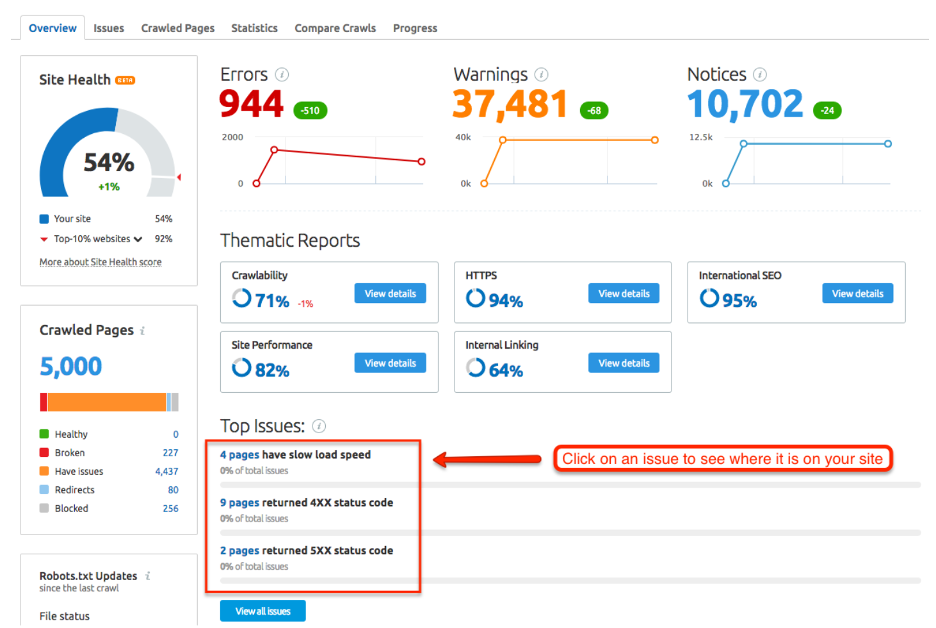
Every SEO campaign starts with a website audit. This is a technical review that identifies issues affecting your rankings. It looks at things like:
- Page speed
- Website structure
- Duplicate content
- Missing meta tags
- Mobile performance
Fixing these issues often produces quick improvements in search rankings.
Keyword Research
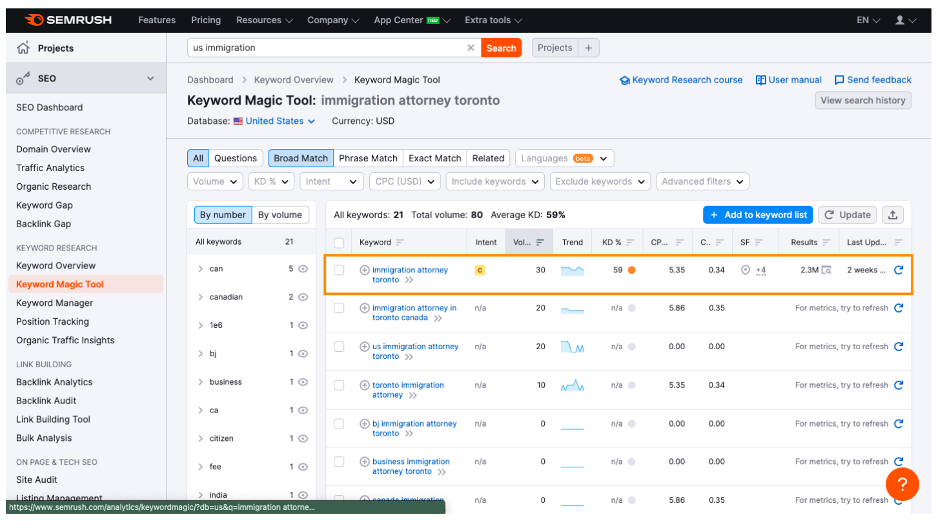
Keyword research helps you understand what potential clients are searching for. For example, people might search for:
- immigration lawyer Toronto
- work permit lawyer Canada
- citizenship lawyer near me
By incorporating these phrases naturally into your website content, you help Google match your pages with the right searches.
Website Optimization
Even great content won’t rank if the website itself isn’t optimized. Google prioritizes websites that:
- load quickly
- work well on mobile devices
- have clear navigation
- provide a strong user experience
Since more than half of web traffic comes from mobile devices, having a mobile-friendly website is especially important.
Content Creation
Content is the backbone of SEO. Articles, guides, FAQs, and videos allow your firm to demonstrate expertise while helping potential clients understand immigration processes.
For example, your website might include articles on:
- work permits in Canada
- permanent residency pathways
- citizenship requirements
This kind of helpful content builds trust before a client even contacts your office.
Many law firms outsource this process to experienced legal marketing teams so attorneys can stay focused on their practice.

Link Building
Links from reputable websites act like votes of confidence.
When directories, legal publications, or community websites link to your firm, Google sees your website as more authoritative.
Internal links also matter. Connecting related pages within your website helps users explore your content and helps Google understand how your pages relate to each other.
Local SEO and Google Business Profile
Immigration law is often local. That’s why people searching for legal help usually want someone nearby, which is why local SEO is essential. Optimizing your Google Business Profile allows your firm to appear in map results when someone searches for immigration lawyers in your city.
A strong profile includes:
- accurate contact details
- client reviews
- photos of your office
- detailed service descriptions
Positive reviews can make a major difference when potential clients compare firms.
AI Search Optimization
Search is evolving beyond traditional search engines. This means more people are now asking AI-powered platforms like ChatGPT, Perplexity, and Google’s AI Overview direct questions when looking for legal services.
AI search optimization focuses on structuring your website content so these platforms can easily understand, reference, and recommend your firm when users search for immigration-related legal help. This often involves creating clear, authoritative content, optimizing structured data, and ensuring your firm’s expertise is consistently recognized across trusted sources online
What Immigration Lawyers Say About SEO
Many immigration lawyers start SEO because they want predictable client growth. The results can be impressive. For example, immigration lawyer Matthew Jeffery partnered with dNOVO to strengthen his firm’s online presence.
“The team at dNOVO significantly improved our online visibility. We now receive consistent inquiries from potential clients who find us through Google.”
You can read the full story here:
https://dnovogroup.com/case-studies/matthew-jeffery/

5 Practical SEO Tips for Immigration Lawyers
Here are a few quick wins that can make a big difference.
1. Offer content in multiple languages
Immigration clients often speak multiple languages. Creating translated content helps you reach a wider audience and build trust with potential clients.
2. Ask for client reviews
Reviews are one of the strongest local SEO signals. After successfully completing a case, politely ask satisfied clients to leave a Google review.
3. Use video content
Video helps visitors understand your expertise and keeps them on your website longer. That engagement signals value to Google.
4. Add schema markup
Schema markup helps search engines better understand the content on your site, improving your chances of appearing in rich search results.
5. Build legal directory citations
Listings on reputable legal directories increase your visibility and help strengthen your local SEO profile.
Getting Started With Immigration Lawyer SEO
When it comes to implementing SEO, law firms typically choose one of three approaches:
DIY SEO
Learning SEO yourself can save money initially, but usually requires a large time investment.
Hiring an in-house team
This works well for large firms but can be expensive.
Working with a legal SEO agency
Many immigration lawyers choose this route because experienced companies such as dNovo Group Toronto’s Seo Agency already know what works in the legal industry.
The Most Important SEO Tip
If there’s one takeaway, it’s this:
Doing nothing is the worst marketing strategy.
Immigration lawyers who invest in SEO today build a steady pipeline of clients tomorrow. By focusing on valuable content, strong technical foundations, and local visibility, your firm can stand out in an increasingly competitive market. And when done right, SEO doesn’t just increase traffic. It connects you with people who genuinely need your help.